Business Website Developer for Companies
A practical guide to hiring a Business Website Developer for companies, service providers, startups, agencies, and professional brands.

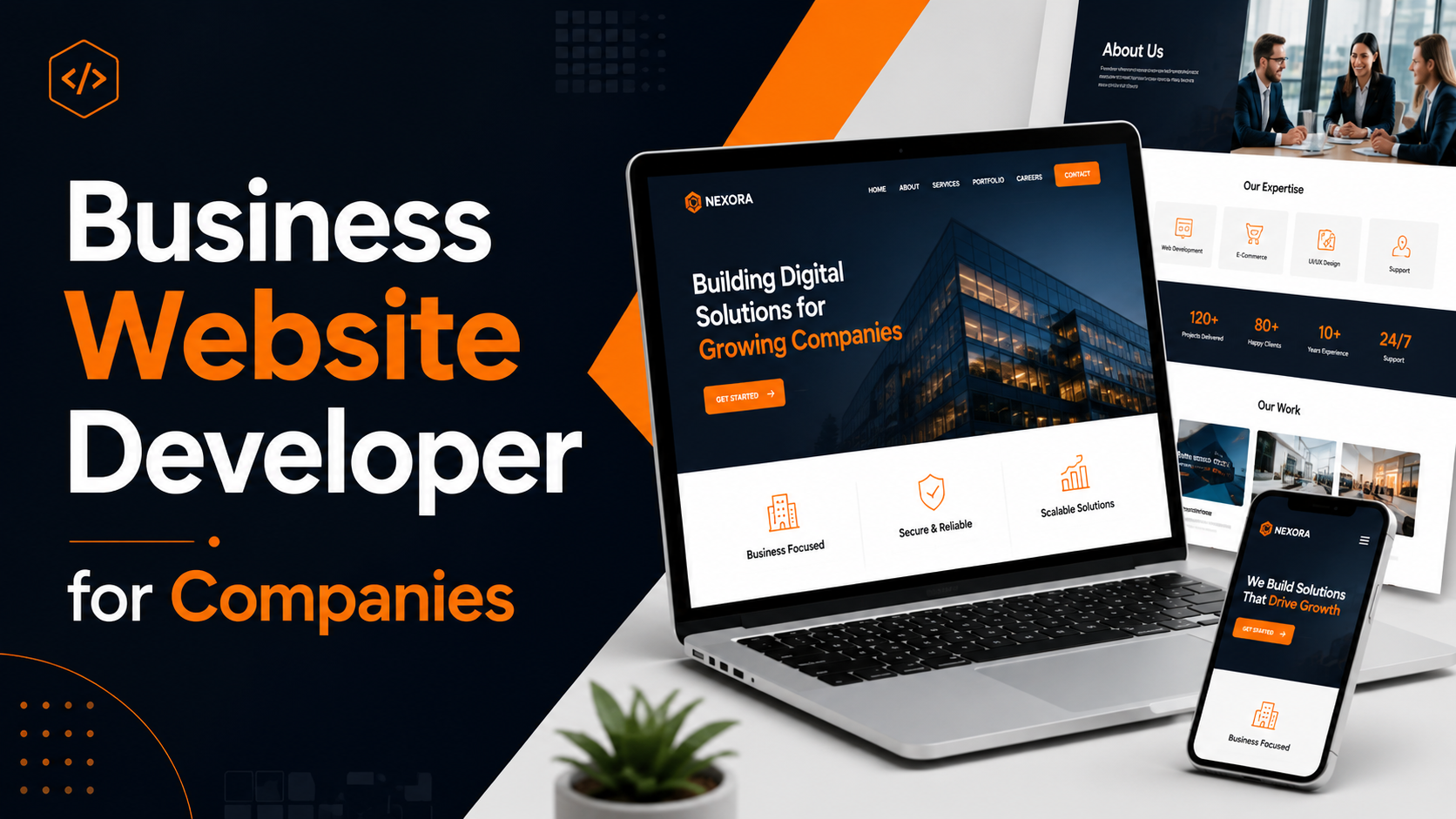
A Business Website Developer helps companies build professional websites that explain services, build trust, show projects, collect enquiries, and support long-term digital presence. A business website is often the first place where potential customers, clients, partners, and prospects check whether a company looks reliable and relevant to their needs.
A strong business website should not only look good. It should communicate clearly, work on every device, load properly, include useful content, and make it easy for visitors to contact the company. The website should explain what the company does, who it helps, what services are available, what experience or projects support trust, and what action visitors should take next.
Companies, startups, service providers, agencies, consultants, and professional brands need websites that are structured around real business goals. This may include service visibility, lead generation, project presentation, brand credibility, local presence, content marketing, or campaign support. A Website Developer Freelancer can help plan and build these pages with the right layout, responsive design, contact flow, and SEO-friendly structure.
What makes a business website effective?
An effective business website has a clear homepage, service pages, about section, project examples, FAQs, contact form, internal links, and responsive design. The website should guide visitors through a simple journey: understand the company, explore services, check credibility, and contact the business. If this journey is unclear, users may leave without taking action.
A business website should also match the company’s actual services and audience. A software company, local service provider, agency, consultant, manufacturer, education business, healthcare provider, and professional freelancer will all need different website structures. A Custom Website Developer can create pages around the real business model instead of forcing every company into the same template layout.
Effective websites also balance design and information. Too much design without clear content can confuse users. Too much text without structure can feel heavy. The right approach uses headings, short sections, cards, images, CTAs, FAQs, and internal links to make information easier to scan and understand.
Business website development features
Business website development should include the pages and features that help the company communicate clearly. A professional homepage is important, but the website should not stop there. Service pages, landing pages, project sections, contact forms, blog pages, internal links, and trust sections can make the website more useful for both visitors and search engines.
A good Business Website Developer should first understand the company’s goal. Does the company want more enquiries? Better online presence? A stronger portfolio? SEO growth? A campaign landing page? A professional brand profile? The answer should guide the website structure and feature list.
- Professional homepage design with a clear business message.
- Service detail pages for each main offering.
- About and company information with credibility points.
- Project, portfolio, or case study sections.
- Contact forms, enquiry forms, and CTA buttons.
- SEO-friendly metadata, headings, and page structure.
- Responsive design for mobile, tablet, laptop, and desktop.
- Trust sections such as testimonials, process, experience, or client types.
- Blog or insight pages for long-term content growth.
- Internal links between services, projects, blogs, and contact pages.
Homepage structure for a company website
The homepage is the main entry point for many users. It should quickly explain what the company does and why visitors should continue exploring. A strong homepage usually includes a hero section, short introduction, service overview, trust signals, process section, project highlights, FAQs, and contact CTA.
The hero section should be clear and specific. Generic lines such as we build solutions or we help businesses grow do not explain enough. A better homepage headline should describe the service, target audience, and value clearly. For example, a business website developer page should explain professional websites, service pages, responsive layouts, forms, SEO structure, and custom website development.
The homepage should also make navigation easy. Visitors should be able to reach service pages, projects, blogs, and contact pages without confusion. A good homepage should introduce the business, but it should also guide users to the deeper pages where they can find detailed information.
Service pages for business visibility
Service pages are one of the most important parts of a business website. A homepage can introduce the company, but service pages explain each offering in detail. These pages help users understand what the company provides, how the service works, who it is suitable for, and how to contact the business.
For example, a web development company may need separate pages for website development, React frontend development, WordPress customization, landing page development, backend development, and admin panel development. Each page can focus on one service and answer specific questions instead of mixing everything into one general section.
Service pages also help build SEO-friendly structure. Each page can have its own title, meta description, H1, H2 headings, internal links, FAQs, images, and contact CTA. This makes the website more useful for visitors and easier for search engines to understand.
Custom Website Developer for business goals
A Custom Website Developer can build a website around your specific services, audience, brand, project examples, and enquiry goals instead of forcing your business into a generic template. Templates can be useful for quick launches, but many business websites need custom structure to explain services properly.
Custom website development can include unique page layouts, service-specific sections, project cards, custom contact forms, landing pages, blog structures, technology sections, process blocks, and tailored CTA placement. This helps the website match the company’s actual sales or enquiry flow.
A custom website does not always mean a complicated website. It means the website is planned around the business requirement. A small company may need a simple but well-structured website. A larger company may need multiple service pages, case studies, blogs, forms, and backend features. The structure should fit the real business stage.
Responsive Website Development for companies
Responsive Website Development is necessary because users open company websites from different devices. A visitor may check a business website from a phone, tablet, laptop, or desktop. The website should remain readable, usable, and visually balanced across all screen sizes.
Mobile responsiveness is especially important for enquiries. Many users click website links from Google Search, social media, WhatsApp, email, or ads. If the mobile layout is broken, the text is too small, or the contact form is hard to use, the company may lose potential leads.
A Responsive Website Developer should test the website across devices and adjust sections carefully. Cards should stack properly, images should resize, buttons should be easy to tap, forms should be simple, and navigation should work smoothly on smaller screens.
SEO Friendly Website Developer for business growth
An SEO Friendly Website Developer builds websites with clear structure, useful content, metadata, headings, internal links, image alt text, and clean URLs. SEO-friendly development is not only about keywords. It is about making the website easier to understand for users and search engines.
A business website should have one clear H1 on each page, useful H2 headings, descriptive paragraphs, service-focused content, optimized images, and internal links between relevant pages. For example, a business website development blog can link to website development services, landing page development, projects, and the contact page.
Blog content can also support SEO growth. A company website can publish practical guides, service explanations, FAQs, project updates, and industry insights. These blogs can bring informational traffic and guide users toward service pages through internal links.
Contact forms and enquiry flow
Contact flow is one of the most important parts of a business website. A visitor may understand the service and trust the company, but if the enquiry process is unclear, the business may still lose the lead. A good website should make contact easy from multiple sections.
Contact forms should be simple and practical. Common fields include name, email, phone number, company name, service interest, project details, and message. The form should show a success message or redirect users to a thank-you page after submission. Email notifications can also help the business respond faster.
CTA buttons should be placed naturally across the website. Buttons such as Contact Us, Start a Project, Request a Quote, View Services, or Book a Consultation can guide visitors toward the next step. CTA placement should support the user journey instead of feeling forced.
Project pages and case studies
Project pages and case studies help companies build trust. Instead of only saying that the company provides good work, project sections show examples. A project page can explain the client type, problem, solution, technologies used, features built, and final result. This helps visitors understand capability more clearly.
Case studies are useful for service companies, agencies, developers, consultants, SaaS businesses, design studios, and professional brands. They can show how the business solves real problems. Even small project examples can improve trust when presented clearly.
A Business Website Developer can create project cards, portfolio sections, case study pages, image galleries, technology tags, and related service links. These sections can also support SEO when they include useful descriptions and internal links.
Business website with blogs and content pages
Blogs and content pages can help companies explain expertise and answer customer questions. A business website can use blogs to cover service guides, industry topics, product updates, FAQs, process explanations, and comparison articles. This gives visitors more reasons to explore the website.
Blogs are also useful for internal linking. A blog about responsive website development can link to website development services. A blog about landing pages can link to landing page services. A blog about backend development can link to custom web application services. This creates a stronger website structure.
Business blogs should be useful and specific. Thin content with generic lines does not help much. A good blog should explain the topic clearly, include practical examples, and guide users to relevant services where appropriate.
React, WordPress, or custom website development
Different business websites need different technologies. WordPress is useful when the company wants easy content management, blogs, and CMS-based updates. React is useful when the website needs a custom frontend, reusable components, fast interfaces, route-based pages, or app-like behavior. PHP, Laravel, CodeIgniter, and MySQL are useful when backend workflows, admin panels, or custom data management are needed.
A Web Developer Freelancer should recommend technology based on the requirement. A simple business website may not need complex backend functionality. A company that needs CRM modules, dashboards, or admin controls may need a custom web application. The development stack should support the business goal, not create unnecessary complexity.
DS Dev Studio can support different website development approaches based on the project requirement, including React websites, WordPress customization, PHP backend systems, landing pages, and custom business web applications.
What to check before hiring a Business Website Developer
Before you hire Website Developer support, check whether the developer understands responsive design, service page structure, contact forms, SEO basics, and business communication. A developer should not only build pages but also understand how those pages support enquiries and credibility.
Review portfolio examples, page layouts, mobile responsiveness, project structure, and content presentation. Ask whether the developer can create service pages, landing pages, blog structures, project sections, forms, and basic SEO setup. Also clarify timeline, content requirements, revisions, deployment, and post-delivery support.
- Check previous business website or portfolio examples.
- Ask whether the website will be responsive on mobile, tablet, laptop, and desktop.
- Confirm whether service pages and landing pages can be created.
- Ask about contact forms, email notifications, and thank-you pages.
- Check whether SEO basics such as metadata, headings, image alt text, and internal links are included.
- Clarify technology choice such as React, WordPress, PHP, Laravel, or custom development.
- Ask about future updates, new pages, blog additions, and maintenance support.
How DS Dev Studio can help
DS Dev Studio by Deepak Sharma can build business websites, service pages, landing pages, React websites, WordPress websites, responsive layouts, contact forms, and SEO-friendly page structures. The focus is on building websites that are clear, professional, practical, and aligned with business goals.
Deepak Sharma Web Developer work includes frontend development, React projects, WordPress customization, PHP backend development, Laravel and CodeIgniter systems, admin panels, CRM modules, API integration, landing pages, and custom web applications. This makes DS Dev Studio useful for companies that need both visual presentation and functional development support.
To hire a Website Developer Freelancer for a business website, DS Dev Studio can help plan the page structure, build responsive layouts, create service sections, set up enquiry forms, add SEO-friendly content structure, and prepare the website for professional online use.
Conclusion
A Business Website Developer helps companies create a professional digital presence that supports trust, enquiries, service visibility, and long-term growth. A strong business website should explain services clearly, work across all devices, include useful pages, provide contact options, show credibility, and guide visitors toward action. DS Dev Studio by Deepak Sharma can help build responsive, SEO-friendly, and custom business websites with service pages, landing pages, React interfaces, WordPress customization, contact forms, project sections, blogs, and practical development support. If your company needs a professional website that looks clear, works properly, and supports business goals, hiring the right website developer can create a stronger foundation for online presence and future growth.
Useful internal links
Frequently asked questions
Can I hire Deepak Sharma as a Business Website Developer?+
Yes. You can hire Deepak Sharma for business websites, service pages, responsive layouts, React websites, WordPress customization, landing pages, contact form setup, and custom website development.
What should a business website include?+
A business website should include home, about, services, projects, FAQs, contact details, contact form, trust sections, clear CTA buttons, responsive layout, and SEO-friendly page structure.
Can DS Dev Studio build custom business websites?+
Yes. DS Dev Studio can build custom business websites based on your services, brand, content, audience, project examples, enquiry goals, and future website requirements.
Can business websites be SEO-friendly?+
Yes. Business websites can include SEO-friendly headings, metadata, service keywords, internal links, FAQs, image alt text, clean URLs, sitemap support, and useful page content.
Can a business website include blogs and projects?+
Yes. A business website can include blogs, project pages, case studies, service pages, landing pages, portfolio sections, and dynamic content sections based on the requirement.