Freelance Developer for Website Project: What to Discuss Before Starting
A practical guide for businesses that want to hire a Freelance Developer for a website project and need to discuss goals, pages, design, content, technology, forms, SEO-friendly structure, backend features, timeline, and support before starting.

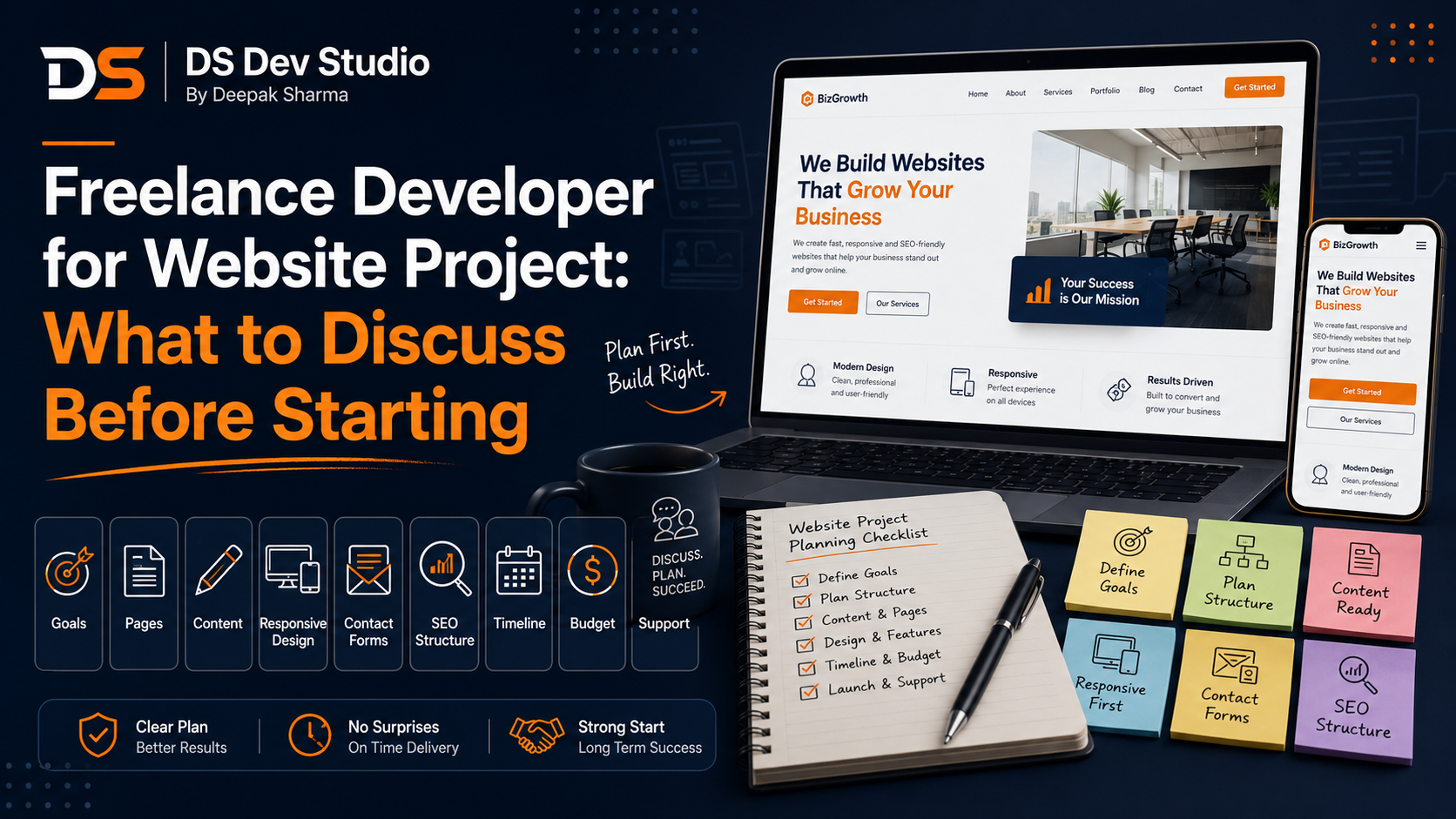
Hiring a Freelance Developer for a website project can be a practical decision for small businesses, consultants, agencies, service providers, startups, and professionals who need a custom website without building an in-house technical team. However, a successful website project does not start directly with design or coding. It starts with clear discussion. Before development begins, both the business owner and developer should understand the goal, scope, pages, content, features, timeline, budget, responsibilities, and support expectations.
Many website projects face delays because important points are not discussed at the beginning. The business may not have content ready. The developer may not know which pages are required. The website owner may expect SEO, forms, backend systems, or CRM integration, but those items may not be included in the original scope. These gaps create confusion later. A clear project discussion helps avoid unnecessary revisions and makes the development process smoother.
A Freelance Developer for Website Project should act as both a technical builder and a practical guide. The developer should understand what the business wants to achieve and then suggest the right structure, design approach, technology, content flow, and form setup. A good website should not only look good. It should explain services clearly, work on mobile, load fast, guide visitors toward contact, and support long-term business growth.
DS Dev Studio by Deepak Sharma helps businesses with website development, responsive website design, React frontend development, WordPress customization, service pages, landing pages, PHP backend systems, Laravel development, CodeIgniter projects, API integration, contact forms, admin panels, CRM modules, MySQL databases, and custom web applications. This guide explains what to discuss before starting a website project with a Freelance Developer.
Start with the main website goal
The first thing to discuss with a Freelance Developer is the main goal of the website. A website can be built for many reasons, but one primary goal should guide the project. Some businesses need lead generation. Some need a professional online presence. Some need service pages. Some need a portfolio. Some need blogs and SEO-friendly structure. Some need contact forms connected with a CRM or admin dashboard.
If the website goal is not clear, the project can become unfocused. For example, a website built for lead generation needs strong CTA buttons, short forms, service pages, landing pages, and enquiry tracking. A website built for portfolio presentation needs project cards, case studies, testimonials, and visual proof. A website built for content growth needs blog templates, categories, internal links, and SEO-friendly layout.
A Business Website Developer should ask what success means for the project. Is success more enquiries, better trust, better mobile experience, more service clarity, better search visibility, or a backend system for managing leads? Once the goal is clear, every design and development decision becomes easier.
Discuss the target audience
The website should be planned for the people who will actually use it. Before starting the project, discuss the target audience with the developer. A website for local customers is different from a website for corporate clients. A website for students is different from a website for business owners. A website for consultants is different from a website for ecommerce or SaaS products.
Target audience affects content, design, page structure, CTA language, and form fields. For example, local service customers may want quick phone and WhatsApp options. B2B clients may want case studies, process details, service pages, and formal enquiry forms. Small business owners may want simple explanations and project examples before contacting.
A Website Developer Freelancer can build a better website when the audience is clear. The developer can decide whether the design should be direct and simple, detailed and informative, professional and corporate, creative and visual, or local and conversion-focused.
Prepare and discuss the required pages
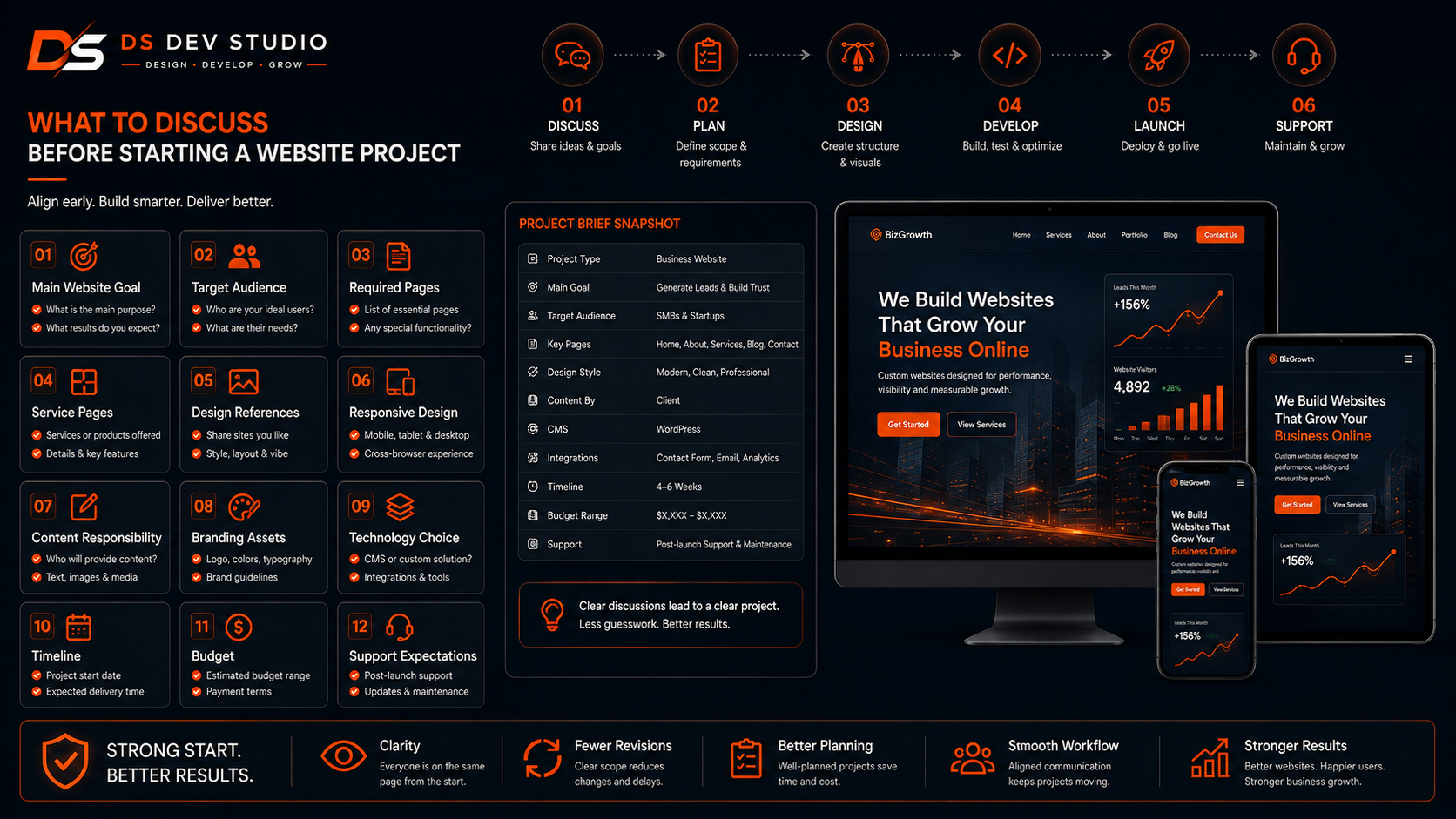
Page planning should happen before design begins. A small business website may need a homepage, about page, service pages, project page, blog section, contact page, FAQs, landing pages, and privacy policy. A consultant may need consultation pages and case studies. An agency may need service pages, portfolio, blogs, and lead generation forms. A CRM or admin panel project may need dashboard screens instead of public pages.
Discuss every required page with the Freelance Developer. Do not assume that a page is automatically included. If you need separate service pages, mention them clearly. If you need a blog section, explain whether you want categories and article pages. If you need landing pages for campaigns, discuss how many and for which services.
- Homepage for business introduction and main CTA.
- About page for credibility and business background.
- Service pages for each important service.
- Portfolio or project page for work examples.
- Blog section for content growth and online visibility.
- Landing pages for specific campaigns or offers.
- Contact page with form, phone, email, WhatsApp, and location.
- FAQ sections for common customer questions.
- Backend or admin dashboard pages where business data must be managed.
Discuss service page structure
Service pages are important for business websites because they explain what the business offers in detail. A homepage can introduce the services, but each major service should have a dedicated page when possible. This improves clarity and supports SEO Friendly Website Development.
Before starting the project, discuss which services need separate pages. A web development business may need pages for website development, React frontend development, WordPress customization, landing page development, backend development, API integration, CRM development, and admin panel development. A consultant or agency may need pages for each consulting package, campaign service, or client solution.
A strong service page should include introduction, problems solved, benefits, what is included, process, FAQs, trust signals, and CTA. A Custom Website Developer should not create service pages that only contain a few lines of text. The page should help visitors understand the service before contacting.
Clarify design expectations and references
Design expectations should be discussed clearly before development starts. Share reference websites if you have any. Explain what you like about them, such as layout, colors, spacing, service section, mobile menu, portfolio style, CTA buttons, or contact form design. References help the developer understand your direction faster.
However, a reference website should be used only for inspiration. Your website should match your business, services, branding, content, and audience. Copying another website directly is not a good approach. A Freelance Web Developer India professional can study references and create a suitable structure for your own project.
Discuss whether you want a clean corporate style, modern startup style, local business style, creative agency style, personal consultant style, or technical product style. Clear design direction reduces revisions later.
Discuss responsive website development
Responsive Website Development should be discussed from the beginning. Many visitors open business websites from mobile phones. If the website looks good on desktop but fails on mobile, the project is incomplete. A Responsive Website Developer should make sure the website works across mobile, tablet, laptop, and desktop screens.
Discuss how the developer will handle mobile layouts, menus, service cards, images, forms, buttons, tables, and CTA sections. Ask whether all important pages will be tested on different screen sizes. Mobile testing should include homepage, service pages, landing pages, blogs, contact page, and forms.
Responsive design is not only a technical feature. It affects user experience and conversions. Visitors should be able to read content, tap buttons, submit forms, and understand services easily from any device.
Discuss content responsibility
Content is one of the biggest reasons website projects get delayed. Before starting, discuss who will provide the content. Will the business owner provide text for all pages? Will the developer help structure the content? Will placeholder content be used first? Will blog content be added later? These questions should be clear.
The developer needs content such as business introduction, service descriptions, benefits, process, FAQs, testimonials, project details, contact information, images, and CTA text. Without content, the website may depend on generic filler text, which later needs replacement and redesign adjustments.
Prepare at least basic content before development starts. It does not need to be perfect, but it should explain the business correctly. A Website Developer for Small Business can then convert that content into proper website sections.
Discuss branding assets
Branding assets should be ready before the design phase. These include logo, brand colors, fonts if available, images, icons, social media links, business profile, and any existing brochure or brand material. If these are not ready, discuss whether the developer will use temporary assets or help create a basic style direction.
Brand consistency matters because the website should look professional and connected. Colors, typography, buttons, headings, cards, and sections should follow a consistent visual style. A Custom Website Developer can create a better interface when brand direction is clear.
If the business does not have complete branding, keep the design simple and professional. A clean website with readable text and consistent colors is better than a visually overloaded website with no clear identity.
Discuss technology choice
Technology should be selected based on project requirements. Before starting, discuss whether the website should be built in WordPress, React, PHP, Laravel, CodeIgniter, or another stack. Do not choose technology only because it sounds modern. Choose it because it fits the business need.
WordPress is useful when the business needs easy content management, blog publishing, page updates, and service pages. A WordPress Developer Freelancer can customize WordPress for small business websites, consultants, service providers, and content-focused businesses.
React is useful when the website needs custom frontend interfaces, reusable components, landing pages, dashboard screens, API-connected forms, or future web application features. A React Developer Freelancer can build responsive UI components for modern business websites and admin dashboards.
PHP, Laravel, CodeIgniter, MySQL, and APIs are useful when the website needs backend systems, CRM modules, admin panels, lead tracking, forms, reports, or custom web application features. A Full Stack Web Developer Freelancer can connect frontend and backend requirements.
Discuss contact forms and enquiry flow
Contact forms should be discussed before development starts because they directly affect lead generation. Decide which pages need forms and what fields are required. A simple form may include name, phone number, email, service requirement, and message. A project enquiry form may need budget, timeline, company name, current website link, or preferred contact method.
Also discuss what should happen after form submission. Should the business receive an email? Should the data be stored in MySQL? Should the enquiry go to a CRM? Should the form connect with Google Sheets or an admin dashboard? Should a confirmation message be shown to the user?
A Backend Developer Freelancer or API Integration Developer can connect forms with email notifications, CRM systems, MySQL databases, admin dashboards, or third-party tools. This should be included in the project scope if needed.
Discuss SEO-friendly website structure
SEO-friendly structure should be discussed before development, not after launch. An SEO Friendly Website Developer should plan clean URLs, proper headings, page titles, meta descriptions, image alt text, internal links, readable content, fast loading, and responsive layouts.
Discuss which pages should be optimized for which topics. For example, website development, React frontend development, WordPress customization, API integration, admin panel development, and CRM development may each need separate service pages. Blogs can then support those service pages with helpful content.
SEO-friendly development does not mean keyword stuffing. It means building a website that is organized, useful, technically clean, and easy for visitors to understand. A developer should create a structure that supports future content growth.
Discuss blog section and content growth
If your business wants long-term online visibility, discuss whether the website needs a blog section. Blogs can help answer customer questions, support service pages, and create more entry points to the website. This is useful for small businesses, consultants, agencies, and service providers.
A blog section may need category pages, article pages, featured images, related posts, internal links, and CTA blocks. If the website is built in WordPress, blog publishing can be managed from the dashboard. If the website is built in React, the developer should explain how blog content will be managed.
Discuss whether the developer will create the blog structure only or also add initial blog posts. This should be clear in the project scope.
Discuss landing pages
Landing pages are useful for campaigns, ads, WhatsApp promotions, email outreach, LinkedIn campaigns, or specific service offers. Before starting the website project, discuss whether you need landing pages now or may need them later.
A Landing Page Developer can create focused pages with clear headline, benefits, trust points, FAQs, CTA buttons, and short forms. Landing pages are different from general service pages because they usually focus on one action and one target audience.
If future landing pages are expected, the developer can build reusable sections and components so new pages are easier to create later.
Discuss backend and admin panel needs
Some website projects need only public pages. Others need backend features such as admin panels, CRM systems, user login, lead tracking, reports, file uploads, dashboards, or database storage. Before starting, discuss whether your project needs backend development.
An Admin Panel Developer can create private dashboards for managing leads, services, blogs, projects, testimonials, FAQs, users, and reports. A CRM Web Application Developer can create systems for lead tracking, customer records, follow-ups, notes, and source tracking.
If backend features are not discussed early, they may be treated as extra work later. A PHP Developer Freelancer, Laravel Developer Freelancer, CodeIgniter Developer Freelancer, or MySQL Database Developer can help build these systems depending on project needs.
Discuss API integration requirements
API integration is needed when the website must connect with other tools or systems. This can include CRM systems, Google Sheets, email tools, WhatsApp APIs, SMS platforms, payment gateways, booking tools, analytics tools, admin dashboards, or custom backend systems.
Before development starts, list all tools that should connect with the website. If contact form data should go to a CRM, say it clearly. If landing page leads should be stored in Google Sheets, mention it. If an admin dashboard should display form submissions, include it in the scope.
An API Integration Developer can plan data flow, validation, error handling, security, and testing. API work should not be treated as a small afterthought because it affects the reliability of business workflows.
Discuss timeline and project milestones
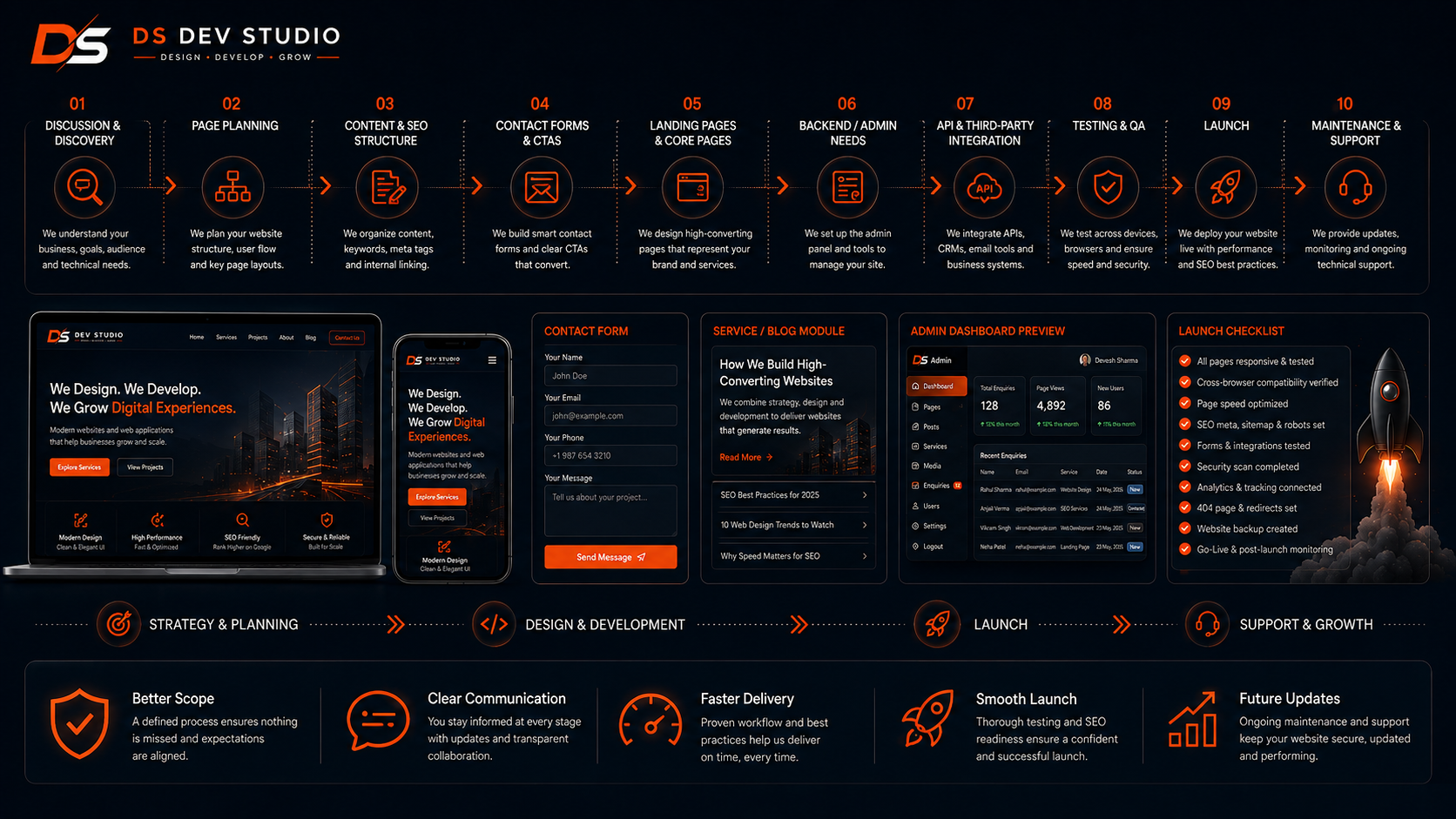
Timeline should be discussed clearly before starting. A website project timeline depends on page count, design complexity, content readiness, technology, forms, backend features, revisions, and testing. A simple website may take less time than a custom React website with backend API integration and CRM dashboard.
Instead of discussing only the final deadline, break the project into milestones. Common milestones include requirement discussion, content collection, design direction, homepage development, inner pages, forms, backend integration, testing, revisions, and launch. This makes progress easier to track.
Business owners should also provide feedback on time. Development can slow down if approvals, content, images, or login details are delayed. A clear timeline should include both developer and client responsibilities.
Discuss budget and scope clearly
Budget discussion should be connected with project scope. A basic website, custom website, WordPress website, React website, landing page system, CRM-connected website, and full custom web application are different types of projects. The cost depends on what is included.
Before starting, clarify what the quoted price includes. Does it include design, development, responsive testing, content upload, form setup, SEO basics, blog setup, deployment, maintenance, and revisions? Does it include backend, API integration, CRM, or admin panel? Clear scope prevents misunderstanding.
A professional Freelance Developer should explain what is included and what will be considered extra. This helps both sides keep the project transparent.
Discuss hosting, domain, and deployment
Hosting and deployment should be discussed before launch. Some clients already have domain and hosting. Others need guidance. The developer should know where the website will be deployed and what technical setup is required.
Static websites, WordPress websites, React websites, PHP applications, Laravel systems, CodeIgniter projects, and MySQL database systems may need different hosting setups. A developer can suggest suitable options based on performance, cost, backend needs, and maintenance.
Also discuss who will manage domain DNS, SSL certificate, hosting credentials, email setup, database access, backups, and deployment process. These details should not be left until the final day.
Discuss revisions and approval process
Revisions are normal in website projects, but they should be managed clearly. Before starting, discuss how many revision rounds are included, what type of changes are covered, and how feedback should be shared. This helps avoid confusion later.
Small text changes, image changes, spacing adjustments, and section rearrangements may be different from major scope changes such as adding new pages, changing technology, creating backend features, or rebuilding the design direction. These should be treated differently.
A clear approval process also helps. Decide who will approve the homepage, inner pages, forms, content, and final launch. Too many decision-makers can slow the project.
Discuss testing before launch
Testing should be part of the project scope. A website should be checked before launch for mobile responsiveness, forms, links, CTA buttons, images, speed, SEO basics, browser compatibility, and backend connections. Testing helps prevent issues that can damage user experience after launch.
Forms should be submitted and checked. Emails should be received. CRM or database entries should be verified if integration is used. Internal links should be clicked. Mobile layout should be tested. Contact details should be checked carefully.
- Test homepage, service pages, landing pages, blogs, and contact page.
- Check mobile, tablet, laptop, and desktop layouts.
- Submit all contact forms and verify delivery.
- Check CRM, Google Sheets, database, or admin dashboard integration if used.
- Click CTA buttons, WhatsApp links, email links, and phone links.
- Review headings, URLs, page titles, and meta descriptions.
- Check images, alt text, loading speed, and broken links.
- Confirm hosting, SSL, domain, and deployment setup.
Discuss maintenance and future updates
A website needs maintenance after launch. Before starting, discuss what support is included. Will the developer fix bugs after launch? Will they update content? Will they add new pages later? Will they provide technical maintenance? Will WordPress plugins or backend systems need updates?
Future updates may include new service pages, blog posts, landing pages, form changes, CRM integration, dashboard modules, speed improvements, SEO updates, and content changes. Discuss how these will be handled and whether they are included or billed separately.
A long-term relationship with a Website Developer Freelancer can be useful for small businesses because websites usually grow over time. The first launch is important, but improvement after launch is also part of digital growth.
Common mistakes to avoid before starting with a Freelance Developer
One common mistake is starting the project without clear requirements. If pages, content, design, forms, and features are not discussed, the developer may build something that does not match expectations. Clear requirements save time for both sides.
Another mistake is choosing a developer only based on the lowest price. A website is a business asset. Poor planning, weak design, broken forms, slow loading, and no SEO-friendly structure can cost more later. The right developer should understand both design and business needs.
Other mistakes include no content preparation, unclear approval process, ignoring mobile design, no form testing, no discussion about hosting, no backend planning, no maintenance agreement, and unclear scope. Discussing these points early makes the project smoother.
Questions to ask before starting the website project
Before starting the project, ask practical questions. These questions help both the business and the developer stay aligned. A professional developer should be able to answer clearly and guide you when something needs clarification.
- What pages are included in the website project?
- Will the website be fully responsive on mobile, tablet, laptop, and desktop?
- Which technology is best for this project: WordPress, React, PHP, Laravel, or CodeIgniter?
- Who will provide the content, images, logo, and brand details?
- How will contact forms work and where will enquiry data go?
- Will the website include SEO-friendly headings, URLs, metadata, and internal links?
- Will service pages and landing pages be included?
- Will backend, CRM, admin panel, or API integration be needed?
- What is the timeline and milestone plan?
- What revisions, testing, deployment, and post-launch support are included?
How DS Dev Studio can help
DS Dev Studio by Deepak Sharma can help businesses plan and build website projects with clear scope, responsive design, service pages, landing pages, SEO-friendly structure, contact forms, React frontend development, WordPress customization, PHP backend systems, Laravel development, CodeIgniter projects, MySQL databases, API integration, admin panels, CRM workflows, and custom web applications.
Deepak Sharma Web Developer work includes HTML, CSS, JavaScript, ReactJS, WordPress, PHP, Laravel, CodeIgniter, MySQL, APIs, frontend development, backend development, responsive UI, business websites, admin panels, CRM systems, and full stack web development. This is useful for businesses that want one developer who understands both website pages and technical backend workflows.
If you want to hire a Freelance Developer for a website project, DS Dev Studio can help discuss requirements, plan pages, choose the right technology, build responsive layouts, connect forms, create service pages, add blog structure, integrate APIs, and prepare the website for launch and future updates.
Conclusion
Before starting a website project with a Freelance Developer, businesses should discuss goals, target audience, required pages, service page structure, design references, responsive development, content responsibility, branding assets, technology choice, contact forms, SEO-friendly structure, blogs, landing pages, backend needs, API integration, timeline, budget, hosting, revisions, testing, and maintenance. Clear discussion prevents confusion and helps the final website match business needs. DS Dev Studio by Deepak Sharma can help businesses with website planning, responsive website development, React frontend development, WordPress customization, service pages, landing pages, contact forms, PHP backend systems, Laravel and CodeIgniter projects, MySQL databases, API integration, admin panels, CRM modules, and custom web applications. With the right planning before development starts, a website project can move smoothly and become a strong digital asset for trust, visibility, enquiries, and long-term business growth.
Useful internal links
Frequently asked questions
Can I hire Deepak Sharma as a Freelance Developer for a website project?+
Yes. You can hire Deepak Sharma for website projects including responsive websites, service pages, landing pages, React frontend development, WordPress customization, contact forms, PHP backend systems, API integration, admin panels, CRM modules, and custom web applications.
What should I discuss before starting a website project?+
You should discuss website goals, target audience, required pages, design references, content responsibility, responsive design, service pages, forms, SEO-friendly structure, technology choice, backend needs, timeline, budget, revisions, testing, deployment, and maintenance.
Should I choose WordPress or React for my website project?+
WordPress is useful when you need easy content management and blog publishing. React is useful for custom frontend interfaces, reusable components, API-connected forms, dashboards, and modern website experiences. The right choice depends on your project requirement.
Can DS Dev Studio connect website forms with CRM or admin dashboard?+
Yes. DS Dev Studio can connect website forms with email notifications, MySQL databases, Google Sheets, CRM systems, admin dashboards, or custom APIs for better lead tracking and follow-up management.
Why is scope clarity important before hiring a Freelance Developer?+
Scope clarity prevents confusion about pages, features, forms, backend systems, revisions, timeline, and cost. It helps the developer estimate correctly and helps the business know what will be delivered.