What Makes a Website SEO Friendly for Small Businesses?
A practical guide for small businesses that want an SEO-friendly website with clear structure, responsive pages, service content, metadata, internal links, and better user experience.

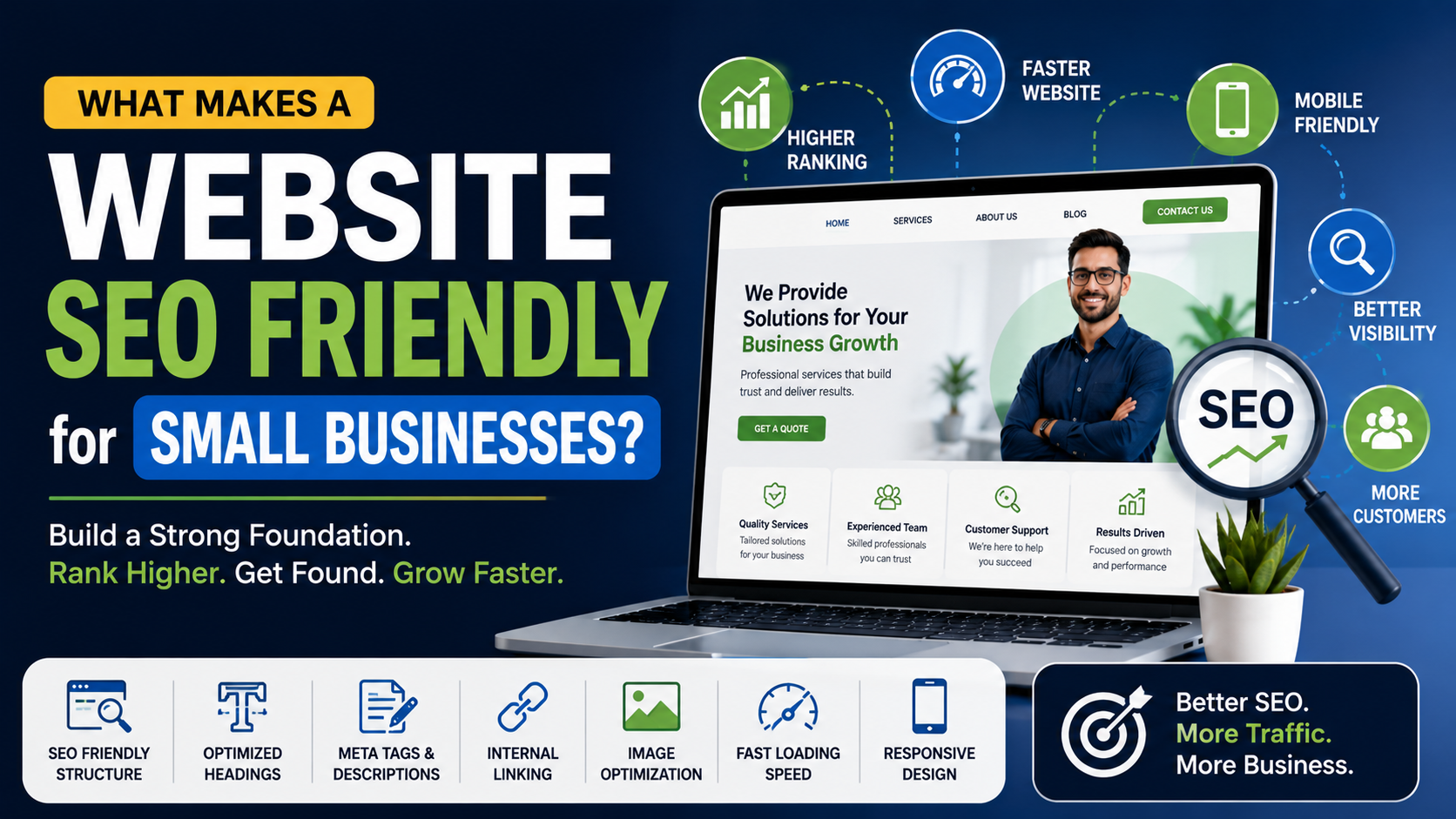
An SEO-friendly website helps small businesses create a stronger online presence by making their pages easier for users and search engines to understand. For a small business, a website should not only look professional. It should also have clear structure, responsive design, useful service pages, proper headings, metadata, internal links, optimized images, contact options, and content that answers real customer questions.
Many small businesses think SEO starts after the website is built, but that is not the best approach. SEO-friendly website development should begin during planning and development. If the website has poor page structure, unclear headings, weak content, slow loading, broken mobile layout, or missing metadata, it becomes harder to improve later. A good SEO Friendly Website Developer builds the foundation correctly from the start.
For small businesses, SEO-friendly structure is especially important because customers often search for services before contacting a company. A consultant, local service provider, freelancer, agency, coaching institute, clinic, real estate business, repair service, or web development studio can benefit from pages that clearly explain services and guide visitors toward enquiries. A website should make it easy for people to find information and take action.
An SEO-friendly website does not mean stuffing keywords into every paragraph. It means building a helpful, readable, technically clean, and well-organized website. The website should answer user intent, load properly, work on every device, include service-focused pages, and connect related content through internal links. This guide explains what makes a website SEO friendly for small businesses and how DS Dev Studio by Deepak Sharma can help build that foundation.
What does SEO-friendly website development mean?
SEO-friendly website development means building a website in a way that supports search visibility, user experience, and business goals. It includes technical structure, content structure, responsive layout, page speed, metadata, headings, internal links, image optimization, sitemap setup, and clean navigation. These elements help search engines understand the website and help users move through the pages easily.
For a small business, SEO-friendly development should start with clear planning. The website should have pages for important services, a homepage that explains the business, an about page for credibility, project or portfolio pages where relevant, blog pages for helpful content, and a contact page that makes enquiries simple. Each page should have a clear purpose.
A Business Website Developer should not treat SEO as an afterthought. The layout, headings, URLs, content sections, forms, image alt text, and internal links should all be planned during development. This creates a stronger foundation for future SEO work, content marketing, local visibility, and customer enquiries.
Clear website structure is the foundation
Website structure is one of the most important parts of SEO-friendly website development. A website should be organized so visitors can easily understand what the business offers. Search engines also need a clear structure to understand which pages are important and how they relate to each other.
A small business website should usually include Home, About, Services, individual service pages, Projects or Portfolio, Blogs, FAQs, and Contact pages. Some businesses may also need landing pages, location pages, case studies, pricing pages, or custom web application sections. The exact structure depends on the business type and goals.
A common mistake is putting all services on one short page. This may look simple, but it limits how much information each service can provide. If a business offers website development, React development, WordPress customization, landing pages, backend development, and admin panel development, each major service should ideally have its own page. This gives users more detail and creates better SEO structure.
- Homepage that clearly introduces the business.
- About page that builds trust and explains background.
- Service pages for each main offering.
- Project or portfolio pages that show proof of work.
- Blog pages that answer customer questions.
- Contact page with form, email, phone, and enquiry options.
- Internal links between blogs, services, projects, and contact pages.
- Clean URLs that describe the page topic.
- Responsive layouts for mobile, tablet, laptop, and desktop.
- Useful FAQs that answer real customer concerns.
Service pages help small businesses rank and convert
Service pages are very important for small business SEO. A homepage gives a general introduction, but service pages explain specific offerings in detail. When someone searches for a service, they usually want a page that directly answers that service requirement. A dedicated service page is better than a short mention inside a general section.
For example, a web development business can have separate pages for website development, React frontend development, WordPress customization, landing page development, backend development, and web app or admin panel development. Each page can explain what the service includes, who it is for, common use cases, technologies used, FAQs, and how to contact the developer.
Service pages also help conversion because they give users enough information before contact. A visitor may not submit an enquiry if the page only has one or two lines. A detailed service page builds confidence by explaining the process, benefits, deliverables, timeline considerations, and next steps.
An SEO Friendly Website Developer should create service pages with one clear H1, useful H2 sections, readable paragraphs, internal links, image alt text, FAQs, and CTA buttons. This makes the page useful for both search visibility and customer decision-making.
Proper heading structure matters
Headings help organize website content. They show users what each section is about and help search engines understand the page hierarchy. A well-structured page usually has one H1 for the main topic, followed by H2 headings for major sections, and H3 headings where extra detail is needed.
For example, a page about responsive website development should have one H1 such as Responsive Website Development for Small Businesses. Then it can include H2 sections such as Why Responsive Design Matters, Mobile-Friendly Layout, Responsive Forms, SEO Benefits, and How DS Dev Studio Can Help. This structure is easier to read than one long block of text.
Small businesses should avoid using headings only for visual size. Headings should describe the content clearly. A heading such as Our Services is okay, but a heading such as Website Development Services for Small Businesses is more descriptive. Good headings improve readability and SEO-friendly structure.
Metadata helps pages communicate clearly
Metadata includes page title and meta description. These are important because they help search engines and users understand what a page is about. A good meta title should be clear, specific, and relevant to the page. A good meta description should summarize the page and encourage users to click without making false promises.
For small business websites, each important page should have unique metadata. The homepage should describe the business. Service pages should describe the specific service. Blog pages should describe the topic. Duplicate or missing metadata can weaken the website structure.
For example, a service page title can be Website Development Services for Small Businesses | DS Dev Studio. A meta description can explain that DS Dev Studio by Deepak Sharma builds responsive business websites, service pages, landing pages, and contact forms. This gives users a clear preview of the page.
Responsive Website Development supports SEO
Responsive Website Development is a major part of SEO-friendly website development because users open websites from many devices. A small business website should work properly on mobile, tablet, laptop, and desktop. If a website looks broken on mobile, users may leave quickly, even if the service is good.
A responsive website should have readable text, flexible sections, optimized images, easy navigation, mobile-friendly forms, and clear CTA buttons. The layout should adjust naturally to different screen sizes. Users should not need to zoom, scroll sideways, or struggle to tap buttons.
Responsive design also supports better engagement. If visitors can read service pages, explore blogs, open FAQs, and submit contact forms smoothly from mobile, the website becomes more useful. A Responsive Website Developer should test all important pages across common screen sizes before launch.
Website speed and performance are important
Website speed affects user experience. A slow website can frustrate visitors and reduce enquiries. Small business websites should be lightweight, clean, and optimized. Large uncompressed images, unnecessary scripts, too many plugins, heavy animations, and poor code structure can slow down the website.
An SEO-friendly website should load quickly enough for users to access information without waiting too long. This is especially important on mobile networks. A visitor who clicks from Google Search or WhatsApp may leave if the page takes too long to open.
A Website Developer Freelancer can improve speed by optimizing images, reducing unnecessary CSS and JavaScript, using clean frontend structure, avoiding heavy plugins, and testing page performance. Performance should be considered during development, not only after launch.
Image SEO and alt text
Images make a website more visual, but they should also be optimized. Image SEO includes using proper file names, compressed image sizes, suitable dimensions, and descriptive alt text. Alt text helps explain the image when it cannot be displayed and also supports accessibility.
For small business websites, image alt text should describe the image naturally. For example, instead of using image1.png with empty alt text, a website can use an image file name like responsive-business-website-development.png and alt text such as Responsive business website layout on mobile and desktop.
Images should not be too heavy. Large images can slow down pages. A Business Website Developer should resize and compress images properly before adding them to the website. Blog feature images, service images, project screenshots, and icons should all be optimized for performance.
Internal linking improves website structure
Internal links connect pages within the same website. They help users move from one relevant page to another. They also help search engines understand page relationships. For small business websites, internal linking is a simple but powerful SEO-friendly practice.
For example, a blog about hiring a website developer can link to website development services. A blog about responsive design can link to React frontend development or website development services. A service page can link to related services and contact page. A project page can link to the services used in that project.
Internal links should be natural and useful. Do not add links only for the sake of adding links. The link should help the user continue their journey. A good SEO Friendly Website Developer should plan internal links between homepage, services, blogs, projects, and contact pages.
Content quality matters more than keyword stuffing
SEO-friendly content should be useful, clear, and focused on user questions. Small businesses sometimes make the mistake of repeating keywords too many times without adding value. This makes the content difficult to read and does not help users. A better approach is to answer real questions naturally.
For example, a page about website development should explain what the service includes, who needs it, what pages are important, how responsive design works, why SEO structure matters, what technologies can be used, and how to contact the developer. This type of content is more helpful than repeating website developer many times.
Small business websites should use simple, professional language. The content should be easy for customers to understand, not written only for developers or search engines. A good website explains services clearly and guides users toward action.
Blog content helps long-term SEO growth
Blogs can help small businesses grow online visibility over time. A blog allows the business to answer questions that customers search for. These posts can educate visitors, build trust, and link to important service pages. Blog content is especially useful for service businesses because customers often research before making contact.
For a web development business, blog topics can include how to hire a website developer, why responsive website development matters, WordPress vs React, how landing pages help small businesses, what makes a website SEO friendly, and how backend systems support business websites. These topics attract users who are learning before hiring.
Blogs should be well-structured. Each blog should have a useful title, clear introduction, helpful sections, internal links, FAQs, and conclusion. Thin blog posts with only a few lines are usually not enough. A detailed blog can support both user education and SEO-friendly website growth.
Clean URLs and sitemap support
Clean URLs make pages easier to understand. A URL should describe the page topic in simple words. For example, /services/website-development is clearer than /page?id=123. Clean URLs help users know where they are and support better website structure.
A sitemap is also useful because it lists important pages for search engines. Small business websites with services, blogs, projects, and landing pages should have a sitemap that includes relevant public pages. This helps organize the website and supports indexing.
A Custom Website Developer should consider clean routes, sitemap setup, and page organization during development. This is especially important for React websites where route-based pages need proper structure and SEO-friendly handling.
Contact forms and CTA sections support conversions
An SEO-friendly website should also help users take action. Getting traffic is not enough if visitors cannot contact the business easily. Contact forms, CTA buttons, phone links, email links, WhatsApp links, and contact sections are important for small business websites.
CTA buttons should be clear and specific. Examples include Contact Deepak Sharma, Start a Project, Request a Quote, Explore Services, or Book a Consultation. These buttons should appear naturally after important sections. They should be easy to tap on mobile and visually consistent across the website.
Contact forms should be simple and mobile-friendly. Common fields include name, email, phone number, service requirement, location, and message. After submission, users should see a success message or thank-you page. This creates a smoother enquiry flow.
Technical SEO basics for small business websites
Technical SEO includes the behind-the-scenes structure that helps a website function properly. For small businesses, technical SEO basics include fast loading, mobile-friendly layout, clean HTML structure, sitemap, robots.txt where needed, proper redirects, secure HTTPS, correct canonical handling, and working pages without broken links.
Small business owners do not need to understand every technical detail, but the developer should. A Website Developer Freelancer should make sure pages are not broken, links work properly, images load correctly, forms submit successfully, and the website can be crawled by search engines.
Technical issues can reduce website performance even when the design looks good. Broken pages, missing titles, poor mobile layout, duplicate content, and slow loading can hurt user experience. This is why SEO-friendly development should include both visible and technical checks.
Local SEO support for small businesses
Many small businesses serve local or regional customers. A website can support local SEO by clearly mentioning service areas, business location, contact details, and relevant local content. This should be done naturally, not by creating low-quality pages with only city names changed.
For example, a Freelance Web Developer in Rajasthan can create helpful pages or sections for businesses in Rajasthan, Jaipur, Udaipur, Kota, Ajmer, or other relevant areas if those locations are genuinely served. The content should explain real services and useful details for those locations.
Local SEO-friendly websites should also have clear contact details, map or location information where relevant, service area descriptions, and links to contact pages. If the business has a Google Business Profile, the website should support consistent business information.
Accessibility and readability improve website quality
An SEO-friendly website should also be easy to read and accessible. Good readability means users can understand the content without effort. This includes clear font sizes, good contrast, simple language, proper spacing, descriptive links, and logical page structure.
Accessibility includes image alt text, keyboard-friendly navigation where possible, readable buttons, proper form labels, and clear error messages. These elements improve the website for more users and create a better overall experience.
For small businesses, readability and accessibility are practical. Customers should not struggle to understand what the business offers or how to contact it. A clean website experience supports trust, enquiries, and professionalism.
What to check before hiring an SEO Friendly Website Developer
Before hiring an SEO Friendly Website Developer, check whether the developer understands both frontend development and SEO-friendly structure. The developer should be able to create responsive pages, clean headings, metadata, internal links, optimized images, service pages, blog layouts, and contact forms.
Review portfolio examples and open them on mobile and desktop. Check whether pages are clear, text is readable, forms work properly, URLs are clean, and the website has useful content. Ask whether the developer can add sitemap support, image alt text, meta titles, meta descriptions, and SEO-friendly page structure.
- Ask whether service pages will have SEO-friendly structure.
- Check whether responsive design is included.
- Ask about metadata, headings, image alt text, and clean URLs.
- Confirm whether internal links will connect related pages.
- Ask whether blog pages and project pages can be structured properly.
- Check whether forms and CTA sections are mobile-friendly.
- Ask about sitemap support and basic technical SEO setup.
- Review whether the developer can support future content updates.
How DS Dev Studio can help
DS Dev Studio by Deepak Sharma can help small businesses build SEO-friendly websites with clear structure, responsive layouts, service pages, blog sections, internal links, metadata, image alt text, contact forms, and user-focused design. The goal is to create websites that are useful for both customers and search engines.
Deepak Sharma Web Developer work includes business website development, responsive website development, React frontend development, WordPress customization, landing pages, backend systems, admin panels, CRM modules, API integration, and custom web applications. This experience is useful when a small business needs a website that looks professional and also has practical structure.
To hire Website Developer support for an SEO-friendly small business website, DS Dev Studio can help plan the page structure, build responsive sections, create service pages, add metadata, set up contact forms, optimize images, and prepare the website for long-term content growth.
Conclusion
An SEO-friendly website for small businesses is built with clear structure, responsive design, useful service pages, proper headings, metadata, internal links, optimized images, clean URLs, fast loading, and helpful content. It should support both search visibility and user experience. A small business website should not only attract visitors; it should help them understand the service, trust the business, and contact easily. DS Dev Studio by Deepak Sharma can help build SEO-friendly websites, service pages, React pages, WordPress layouts, landing pages, contact forms, and responsive business website structures. With the right SEO-friendly foundation, small businesses can create a stronger digital presence, improve customer experience, and support long-term website growth.
Useful internal links
Frequently asked questions
What makes a website SEO friendly for small businesses?+
An SEO-friendly website has clear structure, responsive design, proper headings, metadata, service pages, internal links, optimized images, fast loading, useful content, clean URLs, and easy contact options.
Can I hire Deepak Sharma as an SEO Friendly Website Developer?+
Yes. You can hire Deepak Sharma for SEO-friendly business websites, responsive pages, React websites, WordPress customization, landing pages, service pages, contact forms, and website structure improvements.
Does responsive website development help SEO?+
Yes. Responsive website development helps SEO by improving mobile usability, user experience, readability, navigation, contact flow, and access to important content across devices.
Why are service pages important for SEO?+
Service pages are important because they explain each offering in detail, match specific user searches, support internal linking, and help visitors understand the service before contacting the business.
Can DS Dev Studio create SEO-friendly blog structures?+
Yes. DS Dev Studio can create SEO-friendly blog structures with useful headings, readable content, internal links, FAQs, metadata, image alt text, and links to related service pages.