theMrQ.co.uk Case Study
A custom WordPress editorial platform built with bespoke PHP templates, a native plugin-free page builder, automatic blog archive, single-post templates, SEO integrations and responsive frontend design.
Client
theMrQ.co.uk
Role
WordPress Developer
Timeline
2026
Deliverables
WordPress, PHP
WP
Custom theme
No ACF
Native builder
Blog
Publishing system
SEO
Integrated setup
The brief
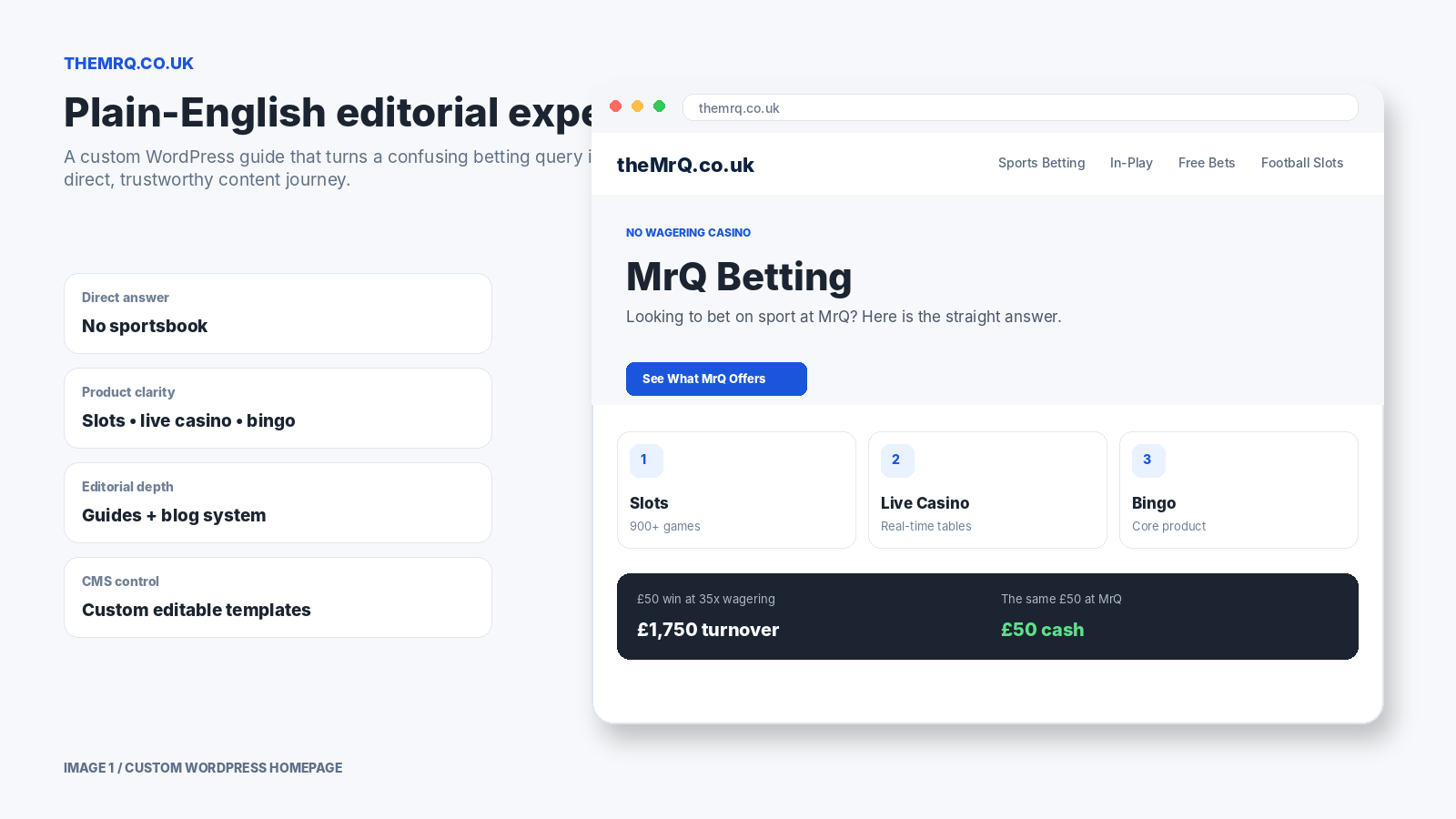
theMrQ.co.uk was the broadest and most technically customised project in the collection. It needed to work as an editorial information website, a custom WordPress theme and a maintainable CMS system where future pages and blog posts could be added without depending on a heavy commercial page builder.
The project started from a custom HTML visual direction and was converted into a WordPress theme. The frontend design needed to remain clean and consistent, while the admin experience needed to let editors manage structured page sections, cards, FAQs, legal pages and blog posts.
The development brief was to build a custom WordPress system using PHP templates, shared header/footer files, native editable sections, starter-page setup logic, Rank Math support, LiteSpeed Cache compatibility, Contact Form 7 styling and automatic blog archive and single-post templates.
Discovery & planning
The planning focused on separating design control from content control. The theme needed to manage layout consistency, while WordPress editors needed practical control over page content.
Editorial structure planning
The website needed to answer direct informational queries and then expand into supporting pages, blog posts, FAQs and legal content. This required a clear page hierarchy and reusable editorial sections.
Theme architecture planning
Shared elements such as header, footer, navigation and global styling were planned inside PHP theme files so the website could stay consistent across pages.
Native CMS controls
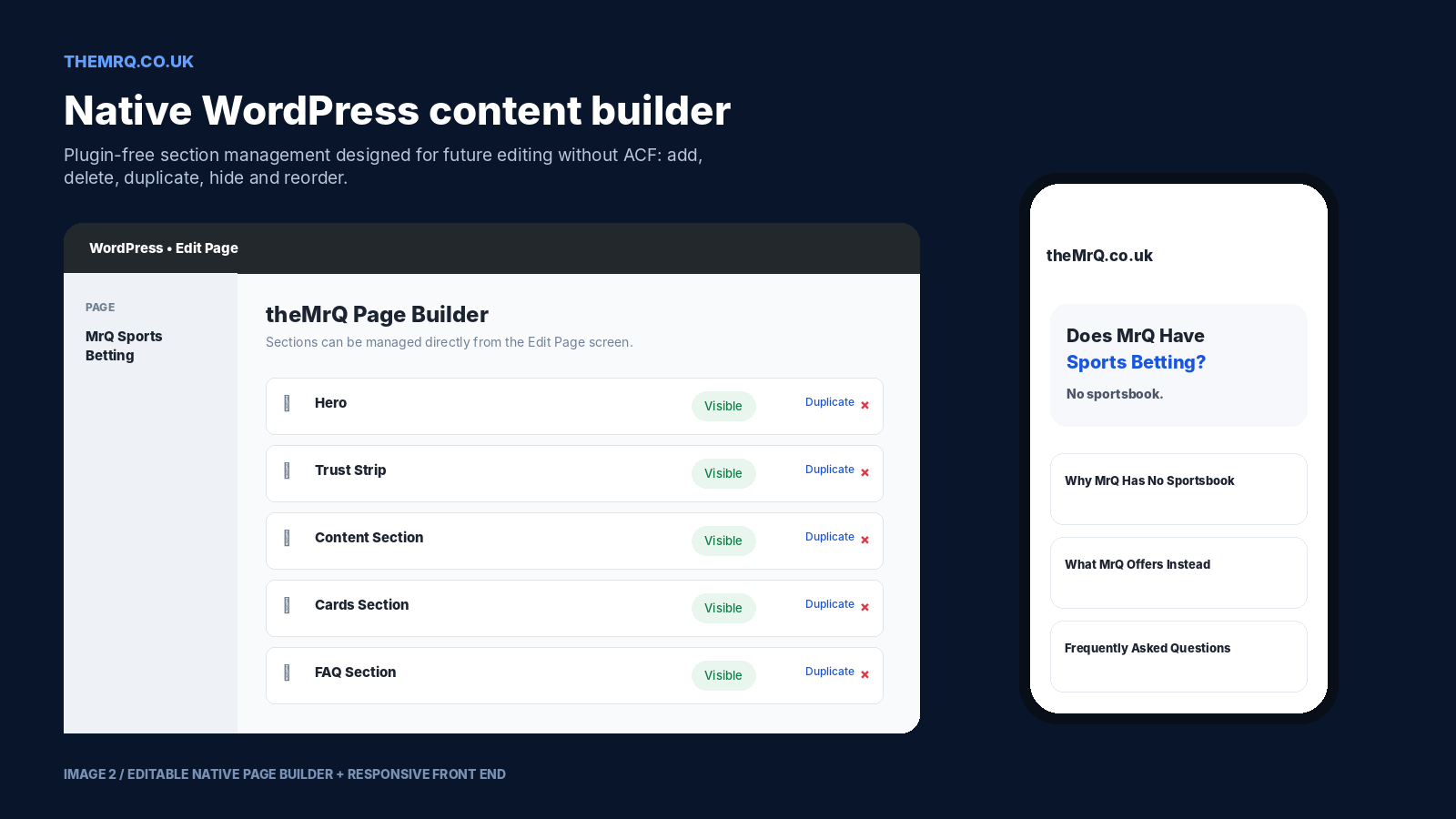
Instead of using Elementor or ACF Pro, the project needed custom WordPress post-meta controls that allow editors to add, duplicate, hide, reorder and delete sections from the edit screen.
Safe update planning
The system needed starter content for new pages, but it also had to avoid overwriting existing customised content during future theme updates.
Discovery and planning view from the theMrQ.co.uk project.
Implementation approach
The implementation combined custom WordPress theme development, PHP templates, native admin tooling and plugin integrations where specialist plugins were useful.
Custom WordPress theme
The supplied HTML design was converted into a real WordPress theme with header.php, footer.php, page templates and shared layout files. This kept the frontend consistent while allowing WordPress to manage content.
Plugin-free native page builder
A native section builder was created using WordPress post meta and custom admin fields. Editors can manage Hero, Trust Strip, Content Section, Cards Section, Comparison Section, FAQ Section, Explore Links and Responsible Gambling sections directly from the Edit Page screen.
Repeatable cards and FAQs
Within supported sections, cards and FAQs can be added or removed. When an item is deleted and the page is updated, it is removed from the saved section data and no longer appears on the frontend.
Automatic starter pages
Starter-page logic can create missing pages, assign the correct template and populate default sections. At the same time, the logic checks existing content before updating so customised pages are not silently overwritten.
Blog archive and single-post templates
The blog system was built so normal WordPress posts automatically appear inside the blog archive. The single-post template supports featured image, category context, reading time, related content and an In This Guide structure based on article headings.
SEO, performance and form integration
Rank Math handles page-level SEO controls, LiteSpeed Cache supports delivery optimisation and Contact Form 7 is integrated into the Contact page with styling that matches the custom theme.
Result
The final website is a custom WordPress editorial platform with a bespoke frontend, native editable sections, automatic page setup, blog publishing, SEO controls, performance support and form integration. For the DS Dev Studio portfolio, this project demonstrates full-stack WordPress theme development, PHP template work, CMS planning, admin usability and maintainable frontend implementation.
- Custom WordPress theme built from bespoke frontend templates
- Native page builder using WordPress post meta instead of ACF or Elementor
- Automatic starter-page setup with safe update behaviour
- Blog archive and single-post templates for future publishing
- Rank Math, LiteSpeed Cache and Contact Form 7 integration
Design strategy
The design strategy focused on making an editorial website that is easy to read on the frontend and easy to manage in the backend.
Template consistency
Shared PHP templates keep navigation, footer, page spacing and responsive behaviour consistent.
Editor control
Native admin fields let editors manage sections without touching PHP code.
Content growth
Automatic blog and page systems allow the website to grow without manual design work for every new post.
Practical plugin use
Custom code is used for the theme and builder, while specialist plugins handle SEO, caching and forms.
Process
A practical overview of how the project moved from requirement understanding to final implementation.
HTML structure review
Reviewed the supplied visual direction and identified which parts should become shared WordPress template files.
Theme file setup
Created the theme structure with header, footer, page templates and reusable frontend sections.
Admin builder planning
Mapped page sections into editable post-meta fields that could be controlled from the WordPress Edit Page screen.
Frontend rendering
Rendered saved section data into the frontend templates while preserving spacing, typography and responsive behaviour.
Blog system development
Created the blog archive and single-post templates so published posts automatically appear with consistent formatting.
SEO and plugin integration
Connected Rank Math, LiteSpeed Cache and Contact Form 7 into the custom theme workflow.
Testing and safe update checks
Checked that saved page sections remain intact and that starter content does not overwrite edited pages.
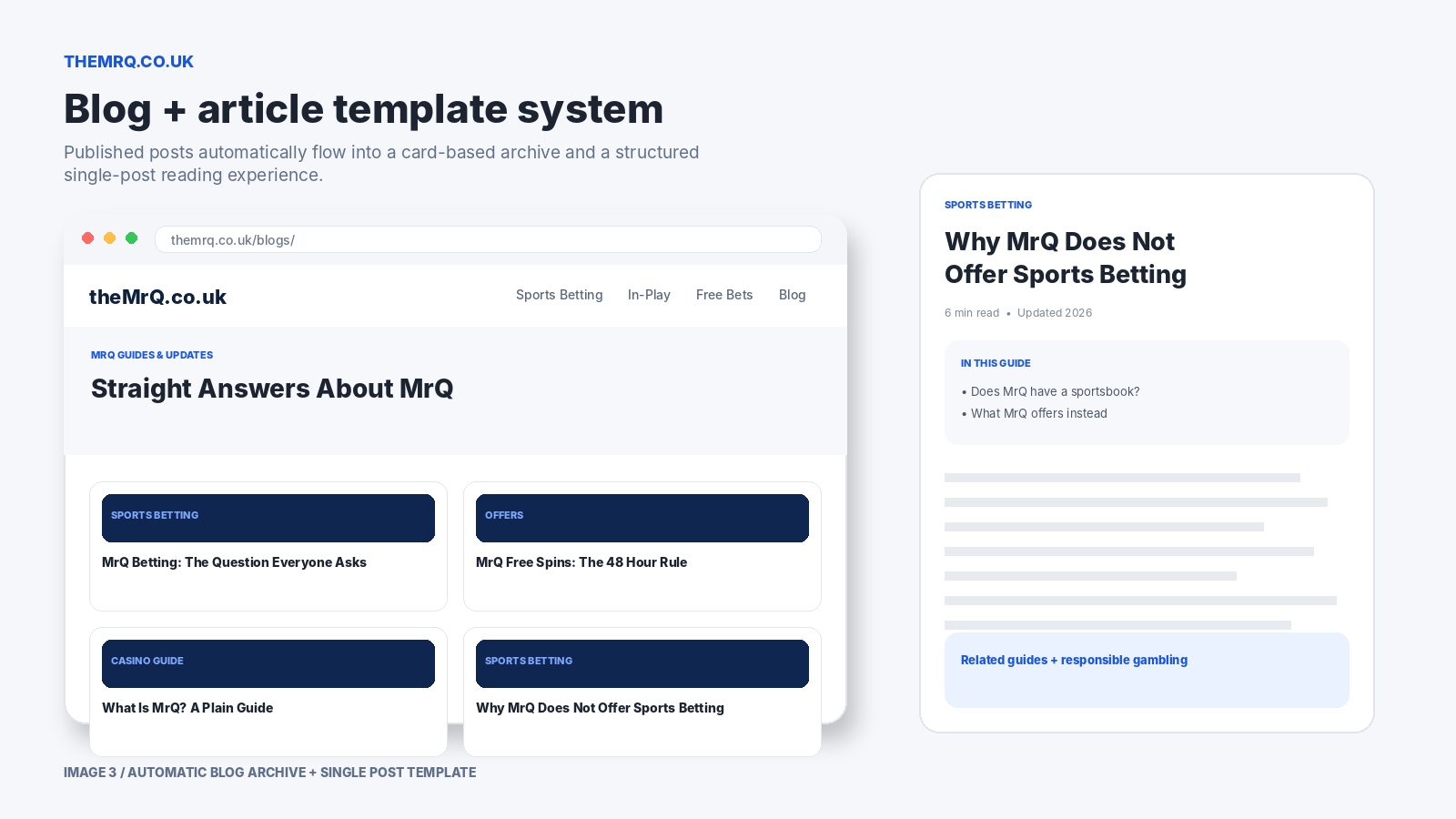
Implementation and final interface view from the theMrQ.co.uk project.
Results
The final website is a custom WordPress editorial platform with a bespoke frontend, native editable sections, automatic page setup, blog publishing, SEO controls, performance support and form integration. For the DS Dev Studio portfolio, this project demonstrates full-stack WordPress theme development, PHP template work, CMS planning, admin usability and maintainable frontend implementation.
- Custom WordPress theme built from bespoke frontend templates
- Native page builder using WordPress post meta instead of ACF or Elementor
- Automatic starter-page setup with safe update behaviour
- Blog archive and single-post templates for future publishing
- Rank Math, LiteSpeed Cache and Contact Form 7 integration
Reflection
theMrQ.co.uk is the strongest WordPress portfolio example because it goes beyond simple visual customisation. It shows how a custom theme can become a practical content-management system.
The native builder is important because it gives editors control without adding a heavy page-builder dependency. This keeps the frontend cleaner and gives the theme more control over output quality.
The safest part of the implementation is the update behaviour. Starter content is useful, but existing edited content should never be overwritten silently. That detail matters in real client projects.
This project demonstrates DS Dev Studio’s ability to build custom WordPress themes, admin tools, editable templates, blog systems, SEO integrations and maintainable CMS workflows.
Frequently asked questions
What was the main goal of the theMrQ.co.uk project?
The goal was to build a custom WordPress editorial platform with bespoke templates, native editable sections, automatic blog templates and SEO/performance integrations.
Was a commercial page builder used?
No. The project used a native WordPress section builder based on post meta instead of depending on Elementor, ACF Pro or another commercial page builder.
Which technologies and plugins were used?
The project used WordPress, PHP, HTML, CSS, JavaScript, Rank Math, LiteSpeed Cache and Contact Form 7.
What was Deepak Sharma's role?
Deepak Sharma worked on custom WordPress theme development, PHP templates, native admin controls, page rendering, blog templates and plugin integration.
Can DS Dev Studio build a similar WordPress website?
Yes. DS Dev Studio can build custom WordPress themes, editable page systems, business websites, blog templates, SEO-ready pages and plugin-integrated WordPress projects.
Interested in a similar project? Get in touch — I am available for website development, React projects, backend systems, and custom web applications.